
Exploring Patriarchy: A Pervasive Dynamic System in Contemporary Social Phenomena
By Mimi Truong
The patriarchy seems to be the common theme surrounding events focused on women in three places in three different global contexts: The 4B movement in South Korea (Asian Boss), Pakistan’s gender gap disparities (Kali et al.), and 2023’s Barbie film in the US (Yakali). Yet, while two of these three countries may not present any apparent relevance to each other or to Americans, each topic illustrates comparable problems to women worldwide. The way these topics portray men and women in society point to a patriarchal structure. The patriarchal structures depicted in South Korea, Pakistan, and the United States are matters that give light to a patriarchy’s repressive characteristics on women. Research findings bring awareness to these areas regarding each phenomenon listed above. They present a better understanding of the world through various examinations from different parts of the world and from within borders, too.
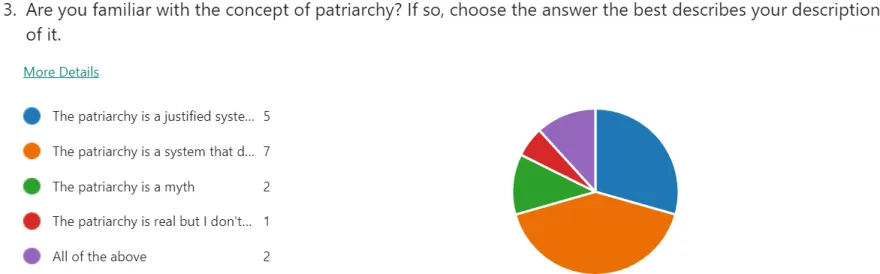
To measure the level of awareness within our community, 17 college students from North Hennepin Community College filled out a survey on their understanding and perspectives regarding patriarchy; the results are profound. Participants were asked to choose one of five descriptions that best fit their viewpoints, and the majority of students choose: “A system that denounces women’s rights in favor of male-lead societal power” (Truong). The survey did not track the responders’ preconceived notions of gender; instead, the survey asked the responders about their age, relationship status, and then the option best suited for their understanding of "patriarchy.” It was found that age ranges from 18-27 who listed that they were single said patriarchy was justified, while ages ranging from 28-38 who were dating chose that patriarchy denounced women’s rights. A visual representation of the findings can be reviewed in Appendix A.
Unlike the answer most respondents chose within the survey, patriarchy is a system where men prosper off feminine subordination, which gives reason to identify a patriarchy as an “exploitative” system. This is supported by Dalton Conley’s You May Ask Yourself: An Introduction to Thinking Like a Sociologist which explains it as, “A nearly universal system involving the subordination of femininity to masculinity” (Conley 309). This means that most of the world runs on this kind of subjugated system. Similarly, if that implication is true, then it would coincide with Cambridge University’s definition: “A society in which the oldest male is the leader of the family, or a society controlled by men in which they use their power to their own advantage” (“Patriarchy”). To combine both interpretations, patriarchy can be understood as a male being appointed control over the females in his family and society. That would explain why the media often portrays family structures where a wealthy man leads the household with a beautifully striking woman at his side. Through such male domination, men in patriarchal structures would have control over resources like wealth, which can then be used to coax submission from others the same way that a pacifier serves a baby’s palette.
An additional definition further strengthens an overview of patriarchy; Dalton Conley’s “subordination of femininity to masculinity” relates to Merriam-Webster’s definition which bears the same principle. It is written, “A social organization marked by the supremacy of the father in the clan or family, the legal dependence of wives and children, and the reckoning of descent and inheritance in the male line.” Thus, patriarchy is essentially a power dynamic wherein masculine dynamism supersedes the feminine within cultural and social contexts, and (through this approach) legal dominion is appointed to male figures as part of generational inheritance. With these three interpretations in mind, a clearer and more coherent understanding of patriarchy can be formed.
As an effect of patriarchal conditioning, these power structures and concepts get passed down generation-to-generation, which then allows the idea of patriarchy to adapt, so it is not a static system that would otherwise remind mankind of some ancient feudal history. Rather, from investigating the following real life case studies, one can see patriarchy is a systemic structure where males are superior through the subjugation of females. It is continually evolving based on the societal norms, legal systems, economies, and existing cultural and institutional structures it interacts with, which demonstrates that patriarchy varies across time and cultures. As historical context and vocal advocates suggest, patriarchy is a dynamic system that evolves to preserve an imbalance of power for males by oppressing female privileges.
Additionally, merging the three definitions from earlier provides a deeper understanding of the foundations of patriarchy. From a sociological perspective, one can see how patriarchy shapes the thoughts and way people view others at large. While the Cambridge University and Merriam-Webster’s definitions inform one of the legal and social power structures which patriarchal structures are built upon, while the historical contexts (on the other hand) may be lost in translation as they are better suited for meta-analysis. This leads one to topical analysis, as is the focus of this paper, where one can analyzes directly (within a specific context) the impacts of patriarchy—as seen in the gender gap disparities within Pakistan.
Firstly, data on Pakistan from the World Economic Forum suggest a significantly more positive emphasis on males than females, as demonstrated by Pakistan’s ranking for 2023 at 142nd place in the global gender gap (Global Gender Gap, 2023 rankings, 11), or from statistics arising out of the World Economic Forum’s Global Gender Gap Insight Report, June 2024 charts where Pakistan was the overall second highest country for gender gaps (World Economic Forum, 2024). Each country is ranked out of 146 countries on four standards. As of 2024, Pakistan has been ranked 145th place as a sign of having great gaps in gender disparities measured by comparisons in economic participation, political power, health standards, and involvement in education shown in Appendix B.
To visualize, picture a numerical system where 146 students are lined up in the order of the highest to the lowest grade. The student in first place having received the highest A is waving a red flag. The 146th placed student having received the lowest grade is waving a blue flag. Well, Pakistan in 145th place is basically holding the blue flag with a minimal 0.002-point difference from 146th place. The difference between these two rankings is negligible, which suggests there is sufficient evidence to support gender gap disparities between men and women in economic participation, political power, health, and education.
For context, Pakistan has a vested history in patriarchal attitudes suggesting a preference for male dominion obtained from female oppression. Before the Aurat March or All Pakistan Women’s Association (APWA), there was the “women independence struggle” of Pakistan in which basic care for women was fought for by women like Ran’na Liaqat Ali Khan, Fatima Jinnah, and Begum Shah Nawaz. Because they fought hard with unwavering courage for Pakistani women’s health and financials, they achieved for a short time educational, social and cultural change. However, despite much effort to women’s rights, they became almost completely obliterated under the leadership of Pakistan’s 16th president who enforced legislation that seemingly targeted women on the basis of sex (Sarwar and Huma), which qualified as discrimination and is why Pakistani women continue to push back to this day.
The way that western society defines “patriarchy” is the same as Pakistani women do because of their allegiance to Aurat March (2020): an annual approach at dismantling patriarchal objectification against women (Kelso). Pakistani organizations like All Pakistan Women’s Association (APWA) and Women’s Action Forum (WAF) were initially created as political movements but crumbled due to political corruption explained by “ahistorical and apolitical discourses” (qtd. in Khan 149). This is how the Aurat March came to be an individualized, self-brought movement for real women’s voices to be heard that has allowed for “personalized politics” to invoke real change, says Akhtar et al. (149). This means that the Pakistani government undermined and dismissed women in politics, thus sustaining male supremacy. Their government’s outdated patriarchal way of guidance nullified any hope for new development. This new development for women’s rights is needed even if it is voided from their history. Being subdued eventually left the women to speak for themselves without any government assistance as an effort in trying to counteract any more helplessness. The continual protests today may be the reason why women remain severely oppressed in Pakistan and ultimately justifies their large gender gap disparities in politics.
Conversely, critics will argue that Pakistan has made strides towards uplifting women in counteracting patriarchal oppression because strides have been made in the health sector. One may reference the Domestic Violence Act 2020 meant to protect women, children, and elder abuse. This act was created to provide women and other vulnerable persons domestic shelter (Human Rights Minister Introduces Bill). However, the Domestic Violence Act of 2020 counteracts the C190: the International Labour Organization and C190: Violence and Harassment Convention (2019); a treaty retaliating forms of harassment and workplace violence that has yet to be ratified since its debut in 2019 (Ratifications of, C190). Essentially what this means is continual perpetuation of systemic oppression because it suggests decreases in women’s wellness. The C190 contrasts the Domestic Violence Act of 2020 by illustrating a division in Pakistan’s administration; One bill is legalized while C190’s international treaty remains inoperative. Despite this answer to the gender gap, there clearly lies favors in subsistence from male-dominion over women’s health. This segregation is not far off from its political historical ways of government for Pakistani women either, as aforementioned.
In reference to economic participation and opportunity in Pakistan, a 2024 study done on minimal labor from female Pakistani doctors attributes discrimination against Pakistani women as the reason for their minor medical contributions according to fellow researchers who have a concentration in contemporary issues (Zulfiqar and Mohyuddin 99). A female interviewee for this study speaks on stigma around being a female doctor in Pakistan saying: “Look, in Pakistan. [sic] Being [sic] a doctor increases the chance of finding a better spouse... especially for women when everybody these days seems to demand a doctor bahu(daughter-in-law) [sic], which, by the way, is very prevalent. Huge investments are made by parents to secure their daughter’s future...” (qtd. in Zulfiqar and Mohyuddin 106). This is one testament among a couple of others that demonstrates the conformity these women face from society and family. This is not to say that Pakistani men were excluded, however. Being given protected titles of “doctor” would certainly boost economic morale and supplement the job market, but that would not explain Pakistan’s ranking in this sector. Instead, the message is that Pakistani women are being taken up as resources to gain from. That is the hallmark of understanding the large gender gap here. They commonly await preordained roles from patriarchal structure, and by exploitation in this way, their education and employment opportunities disconnect, severing any economic impact.
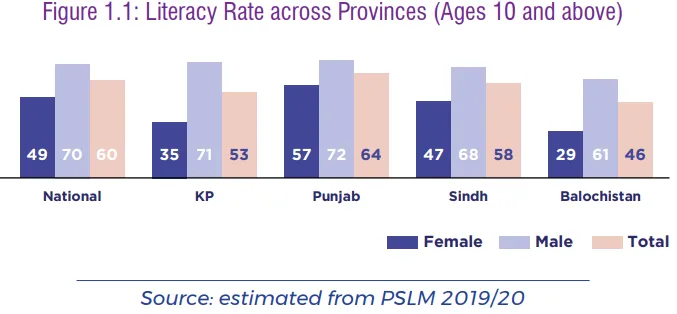
In addition, an astounding 30% of females compared to 83% of males successfully transitioned into the economic sector from secondary education (The Status of Women in Pakistan 9). This may be caused by various reasons. One reason relates to religion, a very touchy subject that is complex and sensitive, while other reasons include socioeconomic status. However, there is not much research to support that the gap in men and women within the economic sector is directly due to a patriarchal structure. Though one thing is clear: young and older cohorts for males do in fact receive more education throughout childhood and adulthood compared to Pakistani females. Graphical representation on literacy rates across provinces for both males and females can be examined in Appendix C.
The same patriarchy that lays the foundation for gender standards in Pakistan has parallels to patriarchy in the United States, where systems like coverture law under the English Common Law have once dominated women by stripping their individualism to mere male objectification (Hoff), which in turn creates the perfect woman. This “Perfect woman” is often likened to the toy Barbie, except in the latest edition of the toy presented in the 2023’s Barbie film. The film highlights the underlying disparities facing the modern woman. Ken, the movie’s male antagonist faces the everyday life a woman does under patriarchy. This gives Ken the chance to experience life from the female gender’s perspective. Still, he remains as Ken whilst living under a “matriarchy” that functions the same as the patriarchy, but where the system operates to advantage women instead of men. From this position, Ken realizes how unfair and harmful the principles of patriarchal philosophy are. This results in him ministering his realization to the other Kens of the patriarchal world: The “perfect woman” is the diminishment of women’s inherent worth.
The purpose of Barbie (2023) illustrates modern-day vanity and how ill-suited the patriarchy is that harms women in the process. One prominent example may be the lingering servitude embedded in women’s thoughts as a rule of thumb. The film highlights the absurdity and contradictions of these thoughts to break the Barbies from the patriarchal thrall the Kens placed them in during the montage quoted below:
Kens cannot resist a damsel in distress. You have to make them believe that you're complacent. That they have the power. And when their guard is down, you take the power back.
You have to be their mommies but not remind them of their mommy.
Any power you have must be masked under a giggle.
You can tell him that you've never seen The Godfather. And that you'd love them to explain it to you.
You have to find a way to reject men's advances without damaging their egos. Because if you say yes to them, you're a tramp, but if you say no to them, you're a prude.
Another one, be confused about money.
And then there's pretending to be terrible at every sport ever. (01:17:31 - 01:20:03)
(Barbie qtd. In Dikmen).
These are some regulations formed by the directives of patriarchy which repress a woman’s character and thus make her emotionally maimed. In this way, there is evidence to support the subjugation between feminine and masculine energies, which relates back to the foundations of patriarchy. The tidbit shows the criterion set for women that reject their natural nature, but in truth, serve as a futile sense of security for being marginalized. What happens when some rules are not abided by or when patriarchal norms are heavily socialized by many, may have conjured up an even heavier resistance from women.
This leads to another example of the circumstances of patriarchy: the 4B feminist movement. For some of those same reasons, the 4B movement started when one of those examples was not abided by. Before that, South Korea was ruled by the Hoju System where their family system was governed by patriarchal standards like having a man as the head of the household with women as his subordinates before it was declared unconstitutional in the early 2000s (National Human Rights Commission of Korea). However, some of the reasons that declared the Hoju System unconstitutional are what South Koreans today are still fighting against, like gender inequality—an issue the 4B movement is rallied around. Here is one (extreme) case that sprouted the 4B movement. According to a South Korean reporter, it came from an unjustified crime case in 2016 where an innocent woman was stabbed to death by a man she did not know and had no relationship to in a Gangnam Station. After his arrest, his confession for the murder revealed his motive to be his feelings of belittlement which he projected onto himself from prior interactions with women, whom he held a grudge against.
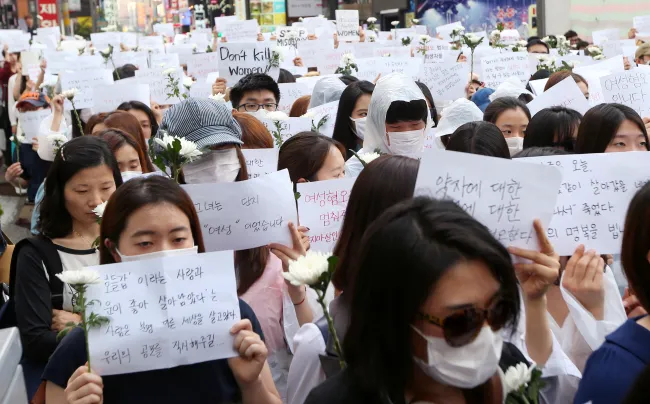
Outrage sparked only after details from the police department’s dismissal of the case as “random” (Asian Boss 3:27-4:57). Due to the killer’s premeditation and gender motivated crime, one could argue this was a hate crime; so, to dismiss it as a random act of violence outraged many. Afterall, this case showed the impacts of previous societal patterns. It is likely the offender in the above stabbing experienced severe distress being given the cold shoulder, which then suggests a cognitive dissonance from internal beliefs among men and is contributing to the other crimes in South Korea from men such as their “digital sex crimes” (Jun). Essentially, the systematic oppression of women (which had occurred until the changed laws in the 2000s) showed no mercy for the sacrifice of a woman’s life, and now Korean women are being told that their outcries are meaningless despite communal efforts as pictured in Appendix D.
On the other hand, it can be argued that the 4B movement, Barbie (2023), and Pakistan’s gender disparities being uprooted by patriarchy is nothing more than a matter of patriarchy being skewed in perception. Firstly, the photograph taken in South Korea during a protest crusading for women’s safety captures a couple of men also challenging the backlash with Gangnam Station’s murder with their presence. Additionally, the excerpt from Barbie is portraying mere hasty generalizations by positioning women at large as coquettish, and then Pakistan’s gender disparities could be because Pakistan may not be as radicalized in terms of religion or government structure as South Korea or the United States (for example). What can now be concluded is that a probable power dynamic issue is underlying global sociality rather than a crude demonstration of systemic oppression otherwise known as patriarchy. With this mindset, such a small interpretation makes the argument weak because it disregards each country’s intersectionality in depth. The reality is that patriarchy will automatically intertwine with every person’s social, cultural, and other identities to which none of that was adequately factored in examining the distribution of power, eventually limiting the view of actual patriarchy.
Of course, there are limitations to this paper; it is correct to say that the patriarchy in this paper is oversimplified. Likewise, the purpose of this paper focuses within the context of three phenomena and what they have in common which is sustained and evolved patriarchal rule. Each subtopic was supported by academic research findings and then connected to patriarchal themes in order to demonstrate a very real social system that still exists. South Korea will remain a crucial reminder of the subjugation of women under patriarchal rule as seen with Gangnam station’s murder that started a feminist movement. On a similar note, Barbie and Pakistan’s gender disparities do not need to display the same levels of radicalization to acknowledge and welcome concrete data presenting the ways women are continually oppressed.
Lastly, patriarchy should be understood as a worldwide, prejudicial problem: gender-based discrimination, especially when one also factors in race and class. It is plausible that patriarchy, a systemic structure, perpetuates extreme gender bias alone, hence disproportionate levels of power. Nonetheless, from the perspective of a limited but important interdisciplinary subject, it can be understood that modern-day women are still overpowered from an intangible yet everlasting force of gender inequality, globally.
However, for right now, patriarchy can confidently be summed up as a systemic structure where females are marginalized from institutional practices and social norms while males benefit from a more tailored approach in these areas. This was first made clear in the World Economic Forum’s report showing Pakistan significantly underwhelmed by female participation in indicators of basic equity. Comparatively, Barbie (2023) calls attention to taboo social norms reserved for females, illustrating the social pressures that are expected to further accentuate male prominence. Lastly, South Korea’s 4B movement’s battle for equality highlights a deeply engrained patriarchal expectation, most notably Gangnam Station’s unjustified hate crime of a woman in 2016. Therefore, research continues to assert that patriarchy is an intergenerational network to subdue females and advantage males through underpinning a wide range of social norms and legal foundations of this dynamic system throughout time.
Appendices
Supporting Graphic Content
Appendix A: Survey Results
Figure 1. People’s Thoughts on the Patriarchy, original research by the author.
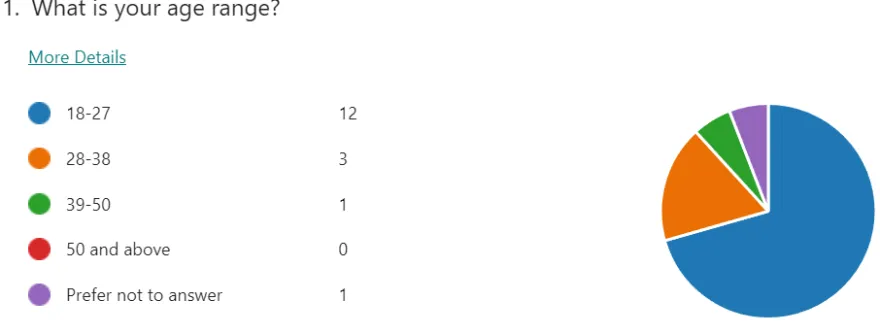
Figure 2. People’s Thoughts on the Patriarchy, original research by the author.
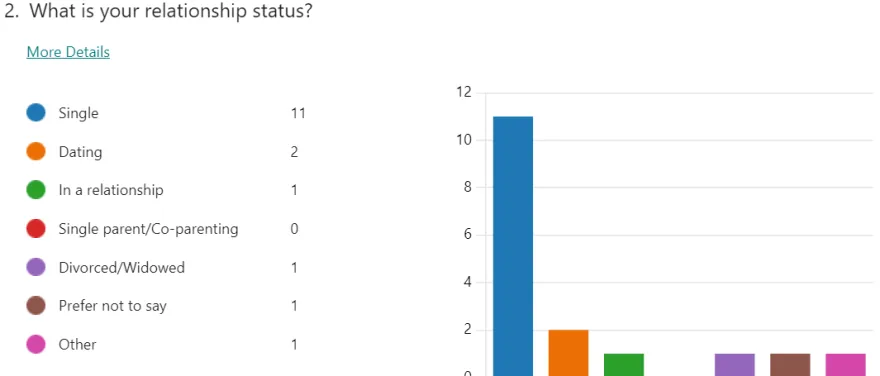
Figure 3. People’s Thoughts on the Patriarchy, original research by the author.
Appendix B: Pakistan Ranks 145th of 146th countries on Gender Disparities
Figure 4. Global Gender Gap Report 2023: Pakistan ranking from Table 1.1 (Global Gender Gap 2023 rankings, 11).
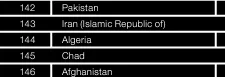
Figure 5. Global Gender Gap Report 2024: Pakistan ranking from Table 1.1 (Pal et al., 12).
Here is the ranking for Pakistan as an accumulation of the four tables below that are judged on four standards: “Economic Participation and Opportunity, Educational Attainment, Health and Survival, and Political Empowerment” (Pal et al., 5). Table 1.1 (scoring from 0-1 (1 indicating the closest to congruity marked before the blue bars)):

Figure 6 Economic Participation and Opportunity: Pakistan ranking from 0-1 Table 1.2 (Pal et al., 16).
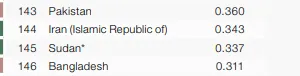
Figure 7. Educational Attainment: Pakistan ranking from 0-1 Table 1.2 (Pal et al., 16).

Figure 8. Health and Survival: Pakistan ranking from 0-1 Table 1.2 (Pal et al., 17).

Figure 9. Political Empowerment: Pakistan ranking from 0-1 Table 1.2 (Pal et al., 17).

Appendix C: Graphical Representation: Literacy Rates across Pakistan
Figure 10. Literacy Rates for Pakistani males and females across provinces (The Status of Pakistani Women 9).
Appendix D: A South Korean protest amidst gender-based hate crimes
Figure 11. South Korean public mourns the loss of Gangnam Station’s murder victim (Yonhap).
Works Cited
Akhtar, Amer, et al. “The Poetics of Pakistani Patriarchy: A Critical Analysis of the Protest-Signs in Women’s March Pakistan 2019.” Journal of Feminist Scholarship, vol. 18, no. 18, 2021, https://doi.org/10.23860/jfs.2021.18.08.
Asian Boss. “The Infamous ‘4B Movement’ in Korea Explained.” YouTube, 21 May 2024, www.youtube.com/watch?v=mNj3DLQRfKA.
Conley, Dalton. You May Ask Yourself: An Introduction to Thinking Like a Sociologist. W.W. Norton & Company, 2008.
Hoff, Joan. “American Women and the Lingering Implications of Coverture.” The Social Science Journal, vol. 44, no. 1, Mar. 2007, pp. 41–55, https://doi.org/10.1016/j.soscij.2006.12.004.
“Global Gender Gap Report 2023.” World Economic Forum, world economic forum, 12 Jan. 2024, p. 11, https://www3.weforum.org/docs/WEF_GGGR_2023.pdf.
Jun, Woo-Chun. “A Study on the Analysis of and Educational Solution for Digital Sex Crimes in Korea.” International Journal of Environmental Research and Public Health, vol. 20, no. 3, Jan. 2023, p. 2450, https://doi.org/10.3390/ijerph20032450.
Kali pal, Kusum, et al. “Global Gender Gap Report 2024.” World Economic Forum, world economic forum, 11 June 2024, p. 385, www.weforum.org/publications/global-gender-gap-report-2024/digest/.
Kelso, Erin. “Women Marching for Solidarity: 5 Years of Aurat March in the Islamic Republic of Pakistan.” Dialectical Anthropology, Springer Science+Business Media, Mar. 2024, https://doi.org/10.1007/s10624-024-09720-4.
“Ministry of Human Rights.” Mohr.gov.pk, mohr.gov.pk/NewsDetail/ZjRhOTFjNWUtMjk3Ny00Njk5LWE3MGItNmMyNGVjOTAyNDky.
“Ratifications of ILO Conventions: Ratifications by Convention.” Ilo.org, 2019, normlex.ilo.org/dyn/normlex/en/f?p=NORMLEXPUB:11300:0::NO::P11300_INSTRUMENT_ID:3999810.
Sarwar, Ghulam, and Zille Huma. “Aurat March and Women Empowerment: Perceptions and Perspectives of Women in Pakistan.” Journal of Development and Social Sciences, vol. 2, no. 4, 2021, pp. 1052-1062. Orient Social Research Consultancy. http://doi.org/10.47205/jdss.2021(2-IV)83.
National Human Rights Commission of Korea. “The Hoju System is Unconstitutional and a Violation of Human Rights” 읽기 : Press Releases, 2003, www.humanrights.go.kr/site/program/board/basicboard/view?currentpage=46&menuid=002002001&pagesize=10&searchcategory=policy&boardtypeid=7003&boardid=7000525. Accessed 19 Jan. 2025.
Truong, Mimi. People’s Thoughts on the Patriarchy. 12 July 2024.
UN Women. “National Report on the Status of Women in Pakistan, 2023, a Summary.” UN Women, UN Women, 2023, p. 28, pakistan.unwomen.org/en/digital-library/publications/2023/07/national-report-on-the-status-of-women-in-pakistan-a-summary.
Yakali, Dikmen. “He is just Ken: Deconstructing Hegemonic Masculinity in Barbie (2023 Movie).” Frontiers, vol. 9, 5 Apr. 2024, https://doi.org/10.3389/fsoc.2024.1320774.
Yonhap. Gangnam Murder Was Not a Hate Crime: Police. The Korea Herald, 22 May 2016, Accessed 29 July 2024, www.koreaherald.com/view.php?ud=20160522000287.
Zulfiqar, Samia, and Anwaar Mohyuddin. “Impact of Patriarchy on Brain Waste of Female Doctors in Pakistan.” Contemporary Issues in Social Sciences and Management Practices, vol. 3, no. 2, June 2024, pp. 99–114, https://doi.org/10.61503/cissmp.v3i2.163.